Most Underrated Bad Bunny Songs
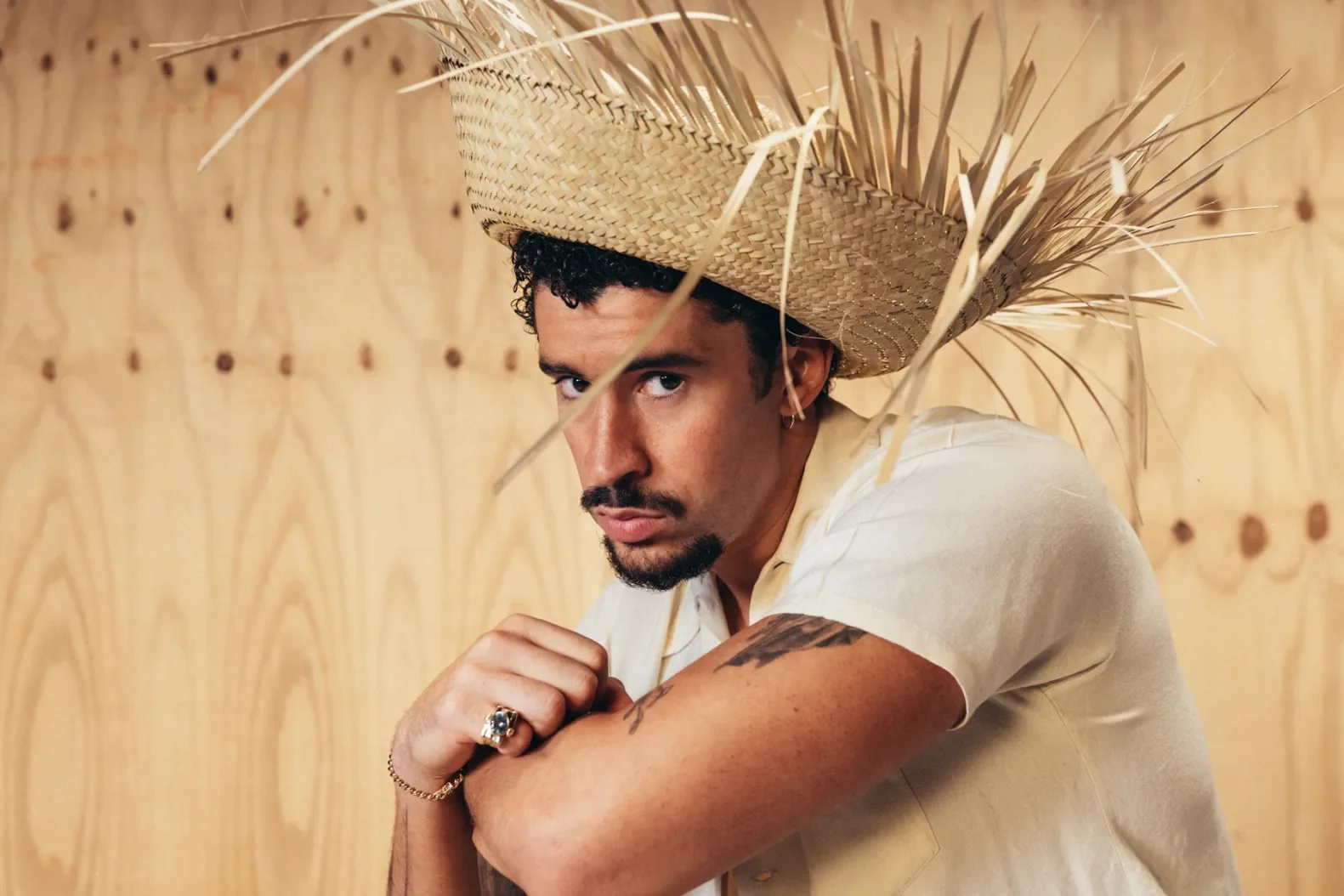
Courtesy of @RollingStone; Credit: Eric Rojas
Discover More
Follow us on Instagram and TikTok for daily music recommendations. Share your email below to receive a Top 10 list personalized specifically to your music taste.
From "Trellas" and "25/8" to "Después de la Playa," discover Bad Bunny's most underrated tracks by exploring the critically acclaimed deep cuts discussed throughout this analysis.
Bad Bunny's biggest hits accumulate billions of streams while some of his most artistically ambitious work collects dust in streaming platforms. For example, "DÁKITI" and "LA CANCIÓN" each surpass 2.3 billion streams, but critically acclaimed deep cuts from the same albums struggle to reach even 50 million plays. This massive streaming gap in tracks like "25/8" (46 million streams) and "Trellas" (18 million streams), reveals a catalog rich with underrated gems that showcase Bad Bunny's experimental rock influences, politically conscious lyrics, and commitment to Puerto Rican cultural preservation.
These underrated songs aren't failed experiments or filler tracks. They're the spaces where Bad Bunny pushes hardest against genre boundaries, collaborates with reggaeton legends, and makes his most explicit political statements. From dream-pop experiments like "Trellas" to anti-colonial anthems like "LO QUE LE PASÓ A HAWAii," these tracks reveal an artist whose ambition extends far beyond chart performance. For music explorers seeking fresh recommendations and music lovers wanting to connect with Bad Bunny's artistry on a deeper level, these underrated songs offer entry points into his most compelling creative territory.
Rock Experiments Define His Most Daring Album Cuts
Bad Bunny's rock en español influences produced some of his most underrated work, particularly across El Último Tour Del Mundo. "Trellas" stands as his boldest artistic gamble: a dream-pop track that collages ethereal textures and misty-eyed vocals à la Gustavo Cerati, the frontman of the iconic Argentine rock band Soda Stereo. The track features surreal lyrics where Bad Bunny seemingly takes pride in cosmic encounters, representing an ode to the golden and experimental era of rock en español.
Despite critical acclaim for its wistful, sad-boy lyrics and celestial synths representing proof of his ambition to transcend the world of reggaeton, the track has accumulated only 18 million streams; that's 99% fewer than "DÁKITI" from the same album.
"Te Deseo Lo Mejor" demonstrates similar artistic ambition through its razor-sharp guitars and slashing rock production. The alt-rock breakup ballad features production by MAG (Marco Borrero), who crafted a revolutionary new sound after Bad Bunny shared curated playlists of diverse inspirational music. MAG produced 9 tracks on El Último Tour Del Mundo, positioning him as the architect of Bad Bunny's most experimental phase.
"Maldita Pobreza" leans into fuzzed-out guitars that drew comparisons to Argentine rock legends Los Enanitos Verde, with influence from Café Tacvba or Caifanes clearly audible. The lyrics, "Maldita pobreza/solo se me olvida cuando tú me besas" (Damn poverty/I only forget about you when you kiss me), serve as a playful callback to the days before Bad Bunny was making $10 million at stadium shows, adding emotional depth beyond typical success narratives.
Politically Conscious Deep Cuts Carry His Strongest Messages
Bad Bunny's most underrated songs often contain his most explicit political statements. "Ser Bichote" from YHLQMDLG speaks to Bad Bunny's ability to narrate a nuanced Puerto Rican experience, chronicling the gaudy rewards that come with drug dealing: something inextricably linked to school closures, poverty, and governmental neglect. The track is loaded with Puerto Rican slang, with "bichote" being the island term for drug dealer or hood boss, documenting linguistic reality while validating Puerto Rican Spanish as a sophisticated language system.
This political consciousness escalates dramatically on DeBÍ TiRAR MáS FOToS. "LO QUE LE PASÓ A HAWAii" directly parallels Puerto Rico's colonial trajectory with Hawaiian annexation. At its heart, the track cautions against the government taking away the culture of Puerto Rico the way it did to Hawaii. Bad Bunny warns in the lyrics: "They want to take away my river, and also the beach," directly addressing how tourism development and gentrification threaten Puerto Rican natural resources.
"LA MuDANZA" transforms personal narrative into political statement by invoking Eugenio María de Hostos y de Bonilla, a scholar, lawyer, and advocate for Puerto Rican independence. The salsa track references his coffin adorned with the Puerto Rican flag "en azul clarito" (light blue), significant because the light blue represents the original Puerto Rican flag design associated with independence movements, distinct from the darker blue of the current colonial flag.
Notable Collaborations: Reggaeton Legends and Genre Cross-Pollination
"25/8" featuring Eladio Carrion represents a reminder of the bar-for-bar bravado assembled in Puerto Rico, built on the calculated songwriting of Eladio Carrion and the bold wordsmithery of Bad Bunny that became the street anthem his day-one trap en español fans still revere. The track stands as a meaningful example of how numerous reggaeton subgenres are a byproduct of hip-hop.
Despite this critical acclaim, the track has accumulated only 46 million streams; that's 98% fewer than "LA CANCIÓN" from the same YHLQMDLG album.
"Pa' Romperla" featuring Don Omar represents a collision of reggaetón royalty: one of those irresistible reggaetón tracks that are impossible not to dance to. Bad Bunny's lyrics explicitly acknowledge the significance: "Que se juntó el rey con el rey" (The king got together with the king). The track appears on Las Que No Iban a Salir, an album partially recorded during quarantine featuring tracks that were pulled from the cutting room floor of the YHLQMDLG sessions and resurrected while in isolation.
"BAD CON NICKY" featuring Nicky Jam offers production innovation that rewards patient listeners. An unexpected structural twist emerges: stay with this track past the two-minute mark to get to the aha moment. The cool but seemingly predictable reggaeton track suddenly morphs into a club tune, the tempo doubling and arrangement punctuated by disco era-like effects. The track samples Daddy Yankee's "Donde Mí No Venga," a seminal track in reggaeton's history from Playero 37 that makes plain the lineage connecting reggae en español and reggaeton.
Genre-Bending Album Openers Reveal Emotional Range
Bad Bunny's willingness to open albums with unexpected sonic choices demonstrates artistic confidence that doesn't always translate to streaming numbers. "Si Veo a Tu Mamá" from YHLQMDLG showed his inner Pisces as he traded booming raps for a lovelorn croon, stretched over a playful, Nintendo-like electronic melody that many compared to "The Girl From Ipanema." The breakup song serves as an ode to one of Benito's biggest inspirations, Seventies salsero Hector Lavoe, another master of heartbreak and emotion.
"Cuando Perriabas" from X 100PRE captures underground reggaeton's authentic energy. Built on a sample of the Plan B track "Bellaqueo," this old-school-inspired neoperreito channels the energy of a sweaty underground reggaeton party through warped vocals and a deconstructed dembow beat. Despite authentically honoring the ghosts of marquesinas past, the track has accumulated only 18 million streams; that's 99% fewer than his biggest hits.
"Yo Visto Así" presents a sweeping, thrashing statement of musical and personal freedom, fusing Latin trap beats with a slick, surprising arena-emo melody. The song's bruised grandeur also hints at the aloneness that often comes with testing your individuality in a judgmental world, giving a heroically cocky anthem a more universal sense of empathy. It resembles the style of Lil Peep or Lil Uzi with aesthetics of American emo/trap.
Bad Bunny's Underrated Deep Cuts: Why Critical Gems Get Lost on Record-Breaking Albums
Even on Un Verano Sin Ti, the most-streamed album of all time with 21.6 billion total streams, exceptional deep cuts receive a fraction of mainstream attention. "Después de la Playa" pulls an insane trick: about a minute into the track, El Conejo Malo transforms what opens as a woozy, synthed-out track into full-blown merengue. This moment is emblematic of his approach to music: Bad Bunny hace lo que le de la gana (does whatever he wants), genre be damned.
Tainy served as primary producer for Un Verano Sin Ti, which became 2022's top album. Despite this pedigree, "Después de la Playa" has accumulated 362 million streams; that's 83% fewer than "Me Porto Bonito" from the same album.
"Andrea" featuring indie-pop duo Buscabulla represents one of Bad Bunny's most socially conscious collaborations. The track has become a rallying cry against femicides and violence against women, with lyrics that are some of his best. Luis Alfredo Del Valle and Raquel Berrios of Buscabulla bring power to the track, adding a distorted disco break and Berrios' alluring vocals, which give voice to women who know they deserve it all. Despite appearing on the most-streamed album ever, "Andrea" has accumulated 261 million streams; that's 73% fewer plays than the album's featured collaborations.
"Otra Noche En Miami" showcases Bad Bunny's falsetto over floating production and sparse beats tapping right into the neon film-noir undercurrent of the 305. The track could have been a forgettable example of rappers whining about how sad they are amid egregious wealth if it wasn't so genuinely emotive.
Production Innovation Happens in the Deep Cuts
"Ni Bien Ni Mal" demonstrates how Bad Bunny uses production to amplify emotional narratives. A crucial moment emerges: there's a point in the track when it feels like the whole song has fallen apart. The ukulele upbeats and sub basses have vanished. What's left are honks and crashes and Bad Bunny mourning, almost half-crying. By the time the beat returns, you're cheering for him to get up, to get over whoever hurt him so bad.
"Antes Que Se Acabe" from El Último Tour Del Mundo evokes 2000's pop-punk melancholy and feels like a possible reminiscence of that iconic +44 record When Your Heart Stops Beating. It stands as one of the best songs in Benito's repertoire.
"Vete" showcases Bad Bunny's skill with interpolation. He took the memorable chorus from Kartier's 2008 hit "Si Te Vas" and interpolated it into this angry perreo ballad, on which he goes scorched earth about a relationship that has been irredeemably broken. The song succeeds because, like all great heartbreak songs, Bad Bunny communicates genuine pain and frustration.
The Streaming Paradox Reveals What Gets Missed
The concentration of streams on singles creates a paradox where exceptional album tracks receive minimal attention. According to Kworb.net data, Bad Bunny's biggest hits establish an enormous baseline:
"DÁKITI" reaches 2.37 billion streams
"LA CANCIÓN" hits 2.37 billion streams
"Me Porto Bonito" accumulates 2.19 billion streams
Meanwhile, critically acclaimed deep cuts receive exponentially less attention:
"Trellas" and "Cuando Perriabas" each have 18 million streams
"25/8" has 46 million streams
This represents a 97-99% streaming gap from top hits
Even on albums with billions of streams, individual deep cuts struggle to reach 50 million plays. This streaming concentration means that exceptional tracks praised as artistic highlights receive less than 2% of the attention that singles accumulate, regardless of critical acclaim or cultural significance.
Bad Bunny effortlessly blends the classic genres of Puerto Rico, including plena, música jíbara and salsa, with more modern sounds like house and reggaeton across DeBÍ TiRAR MáS FOToS. This isn't merely musical experimentation; it's intergenerational cultural transmission, introducing younger audiences to their musical heritage while demonstrating these forms remain sonically relevant.
While Un Verano Sin Ti is ostensibly about a person and their absence, its joy and yearning is always rooted in the ground of Puerto Rican identity through mambo, dembow, and Caribbean house.
These underrated songs reveal an artist who views commercial success as a platform for artistic experimentation rather than a constraint. Bad Bunny's deep cuts preserve Puerto Rican musical traditions, challenge genre boundaries, make explicit political statements, and showcase production innovation that his biggest hits often can't accommodate. For listeners willing to venture beyond algorithmic recommendations, these tracks offer the most compelling evidence of Bad Bunny's artistic ambition.
